“PLEASE… BE MY CHILD’S MOTHER FOR JUST ONE NIGHT” — THE COWBOY BEGGED A CURVY STRANGER, AND HER ANSWER SHOCKED THE ENTIRE TOWN

PART 1
The alley behind the old tailor shop in Dry Creek, Kansas, was forgotten for a reason. Its walls sagged, boards split and grayed, weeds clawed at the dirt in stubborn tufts, and the smell of mildew hung in the air like a curse. Yet Mabel Hart had claimed it as her refuge.
For days, she had occupied that shadowed corridor, far enough from the town’s gossiping eyes, yet close enough to witness every subtle cruelty. A glance that skimmed her face too quickly, doors that slammed before she could finish a sentence, hushed laughter that whispered judgment—it all felt like a series of small betrayals, each one sharper than a knife.
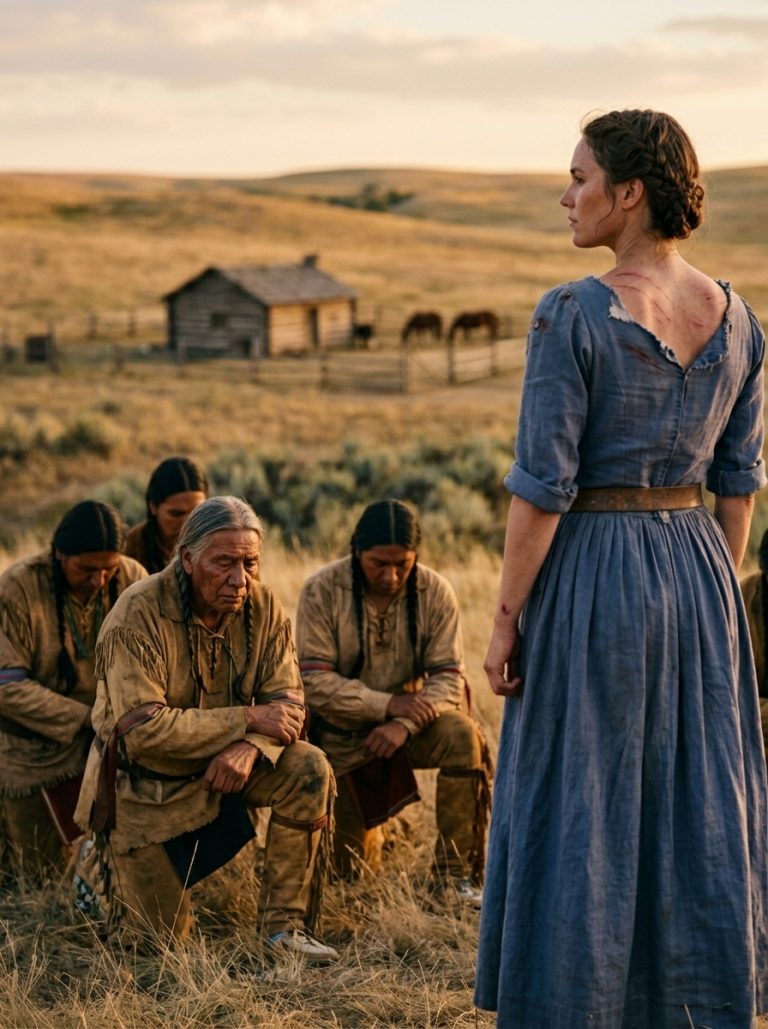
Mabel was twenty-two, broad through the hips and shoulders, her body generous in a world that expected women to shrink. Her blue dress, faded and dirt-streaked, had endured too many days of dust and hardship. A seam near her hip had surrendered, revealing a swath of sun-browned, bruised skin. Her chestnut hair, once gleaming, clung to her face in dull, knotted ropes. She had cried once, the first day she was cast from the boarding house, and had learned grief was no shield: the world continued to turn, indifferent to her tears.
The boarding house had been a modest sanctuary under Mrs. Pritchard, a widow whose hands were tired but generous. For scrubbing floors, washing sheets until her knuckles cracked, Mabel had been granted a narrow corner in the laundry room and a bowl of stew when there was enough to spare. But Mrs. Pritchard had died, leaving her son Elias in charge. He arrived the morning after the funeral, jaw tight, eyes cold, and told her bluntly:
“I can’t have you here anymore.”
Mabel pleaded, offering to work harder, take less, to do anything at all. Elias waved her away with the finality of a man who had already decided the world owed him nothing. Her possessions—two worn dresses, socks riddled with holes, and a tin comb from her mother—felt less like belongings than evidence of her own undesirability. The flour sack that carried them split, leaving her arms empty but her shame full.
She had tried every option: the church, the saloon, the general store’s back door, even lingering outside houses where curtains twitched with suspicion. Hunger had become dull, unrelenting. She drank from the rain barrel, tasting rust and leaves, and watched the town live on without her: wagons rolling, horses stamping, men laughing, children shrieking. None of it had space for her.
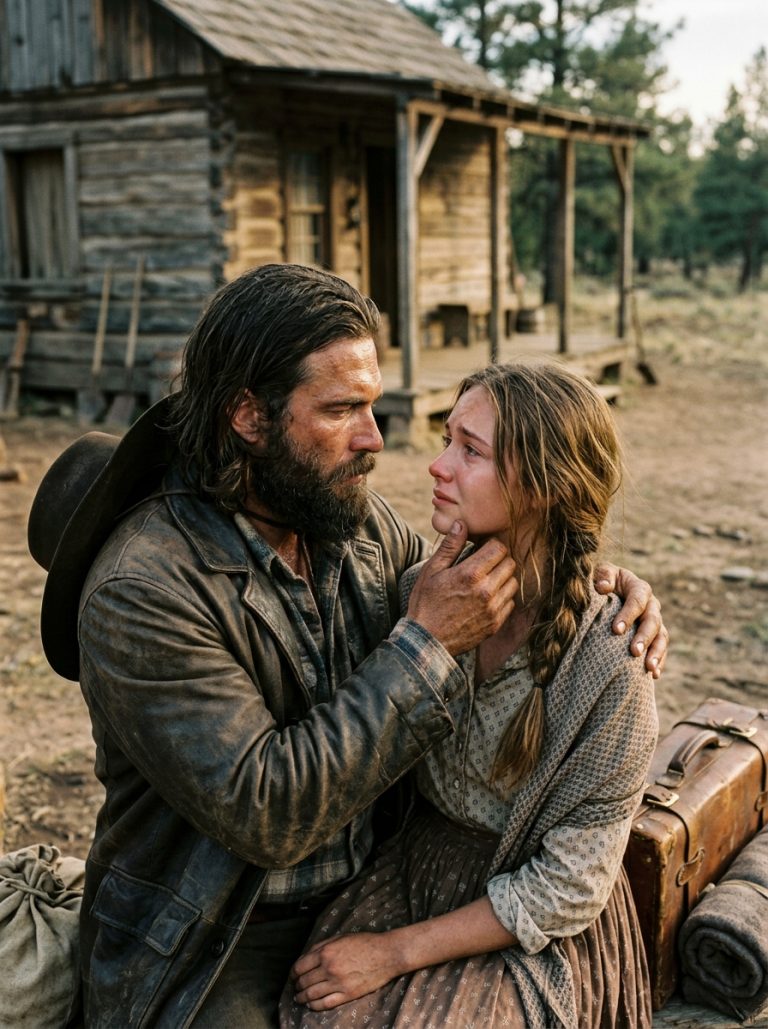
Then, near dusk, a new presence entered the alley. Boots struck gravel with urgency. A tall man, lean and coated in dust, moved toward her. His dark coat hung loose over a worn work shirt. A wide-brimmed hat shadowed his face, but not enough to hide exhaustion carved into his features. In his arms, a bundle cried sharply—a baby.
Mabel shrank against the wall, hoping to vanish. The man’s gaze, however, found her immediately. He stepped closer, his boots crunching over grit and weeds.
“You got milk?” he asked, voice rough but desperate, carrying a vulnerability that startled her.
Mabel’s heart hammered. She had never been asked for anything like this before. She had survived by invisibility; now the world demanded that she act. The baby’s cries rose, and with them, a strange, unbidden courage within her.
Then the man’s eyes flicked toward the alley’s mouth, scanning for escape, for judgment, for help. “I… I need someone,” he muttered, voice breaking. “Please… just for one night… take care of her.”
The words landed like a gunshot in Mabel’s chest. One night. A life. Responsibility thrust at her from a stranger who could barely hold himself upright. Her fingers clenched. Her breath caught. In that moment, she realized that survival and choice were not always aligned.
PART 2
Mabel’s eyes met the man’s, searching for cracks, for signs that this was some cruel joke. The baby wailed again, fists clenching, tiny face red. His name, he said, was Caleb Mercer. A cowboy from the outskirts, he had ridden across the sun-baked plains with nothing but his horse, his hat, and the fragile life of his child pressed against his chest.
Caleb explained, in ragged sentences, how he had been forced to leave the boarding house under threat, how the child’s mother had vanished days ago, and how the town offered no mercy. “I have no one else,” he said. “I can’t keep her safe on my own.”
Mabel listened, measuring. The alley smelled of dust and weeds, and yet, in that suffocating tightness, a strange clarity arrived. She knew what it meant to be unwanted, unseen, discarded. Yet she also knew the weight of courage: sometimes it required stepping into danger without guarantee.
Her voice came out steady, though her fingers shook. “I will… for one night. But you understand, I’m not some charity. I will not be treated like property.”
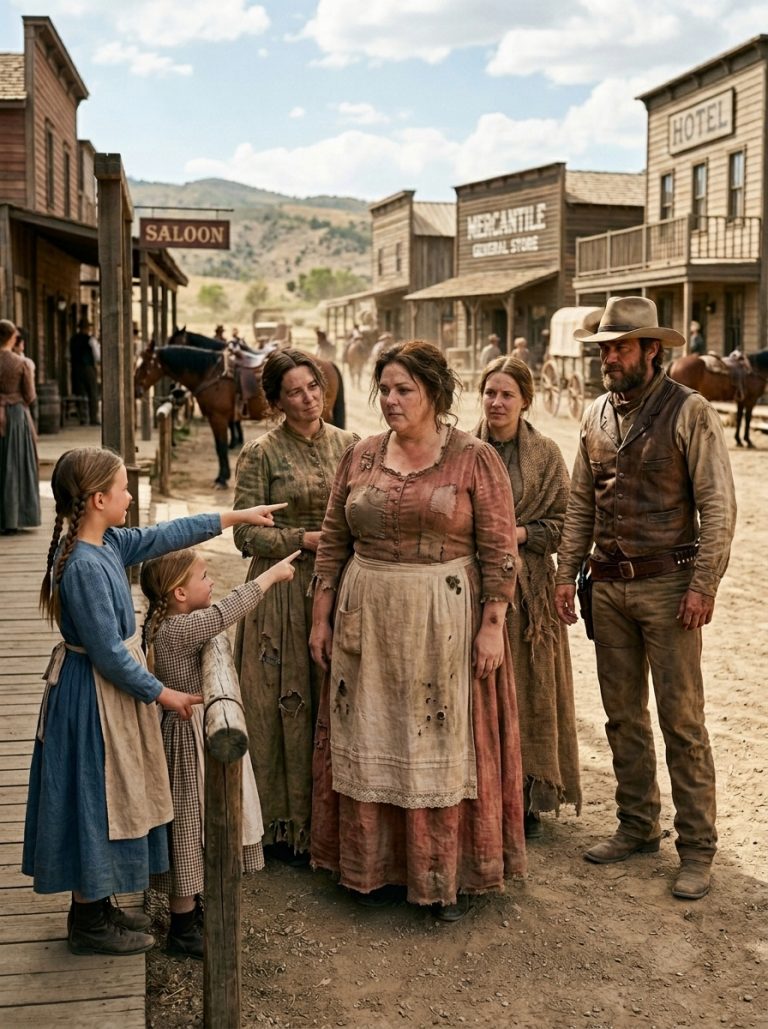
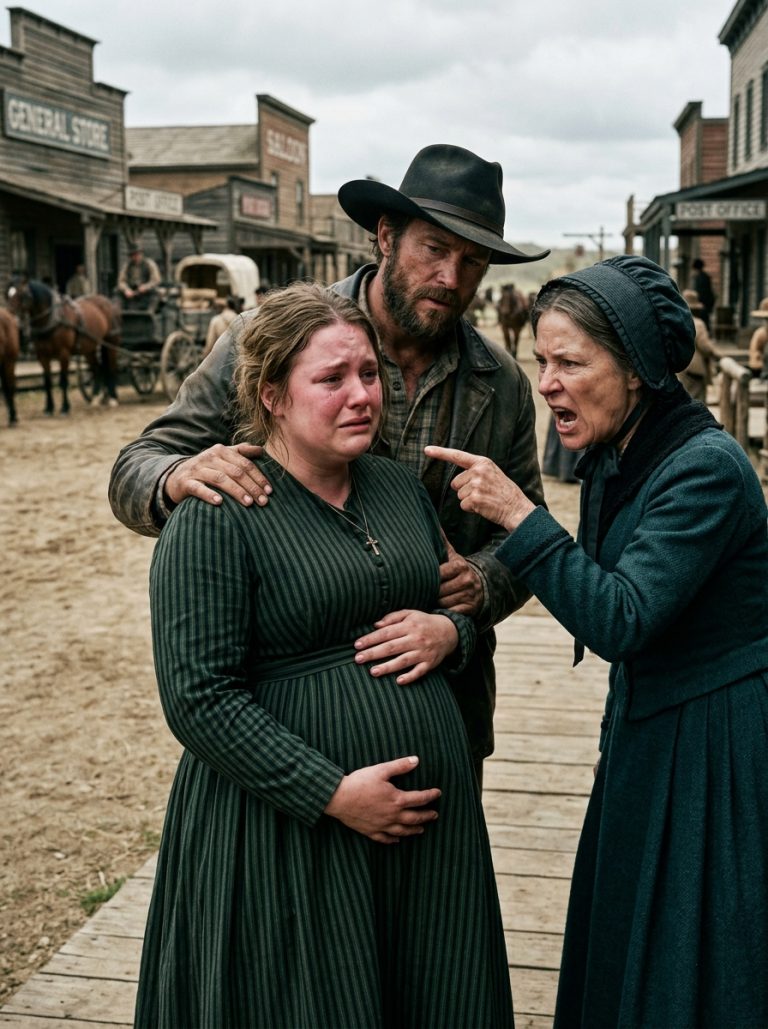
Caleb’s relief was visible, raw. He nodded, almost unable to speak, and together they made their way out of the alley. The streets of Dry Creek seemed smaller, the shadows longer, as townspeople glanced but did not intervene. Rumors were like dust; they would settle eventually, but for now, there was only the journey forward.
As they reached the outskirts of town, a horse trotted up behind them. A figure, tall and broad-shouldered, dismounted and stepped forward, eyes sharp as a hawk. “Mercer,” he called. “Thought you could hide from me?” The stranger introduced himself as Silas Crowe, a rancher whose reputation carried fear in every whispered name. His gaze shifted to Mabel, appraising, calculating.
Caleb stiffened. Mabel felt the hairs on her arms rise. Crowe’s presence was like a storm waiting to strike, yet Mabel felt the stirrings of resolve. She had survived the world’s indifference; she would not bend to fear now.
Crowe advanced, hand near his holster, and his eyes locked on Mabel with a look that promised both danger and inevitability. The baby cried, oblivious to the tension, as Mabel stepped forward, voice calm but unyielding: “You will not touch her.”
PART 3
Crowe’s laugh was low and cruel, echoing across the dusty plains. “And who’s going to stop me, girl? The cowboy? The baby?”
Mabel’s chest tightened. But then something remarkable happened. Caleb squared himself, hand hovering over his revolver, but his eyes never left Mabel. He had brought her here for one night, but together, they were more than a cowboy and a stranger—they were a unit.
“What I say goes,” Mabel declared. Her voice carried the authority of someone who had been unseen for too long, who had survived scorn, hunger, and abandonment. Crowe blinked, unaccustomed to defiance from those he deemed powerless.
The confrontation escalated. Crowe demanded obedience; Mabel refused. Caleb stepped closer, covering her back, and the tension in the air was palpable, like the calm before a storm. Then, the sound of hooves rattling in the distance—the townspeople had gathered. Men who had once looked the other way now rode with determination.
In the standoff that followed, Crowe realized he had underestimated the combination of courage, compassion, and community. Threats faltered against unity. Retreat became his only option.
In the aftermath, Caleb, Mabel, and the baby settled in a small cabin at the edge of town. Neighbors brought supplies, offered lessons, and joined in the rebuilding of trust and shelter. The child thrived, laughter echoing across the porch. Caleb and Mabel learned the rhythm of one another, their connection deepening not from romance, but from shared courage and choice.
Weeks passed. Mabel discovered that her own resilience was a shield as formidable as any weapon. Caleb realized that trust could grow in the unlikeliest of places. Together, they transformed survival into life, poverty into abundance of spirit, and one desperate night into a foundation for family and hope.
When the sun set over Dry Creek, painting the hills copper and gold, Mabel held the baby close. Caleb stood at her side, shoulders relaxed, eyes soft. She thought of the alley, the dust, the indifference of the town—and smiled. Life had demanded courage, and they had given it. The town whispered, yes—but this time, it was awe. In that quiet moment, Mabel understood: family is never about ownership. It is about bravery, trust, and the choice to protect one another, even against the world itself.