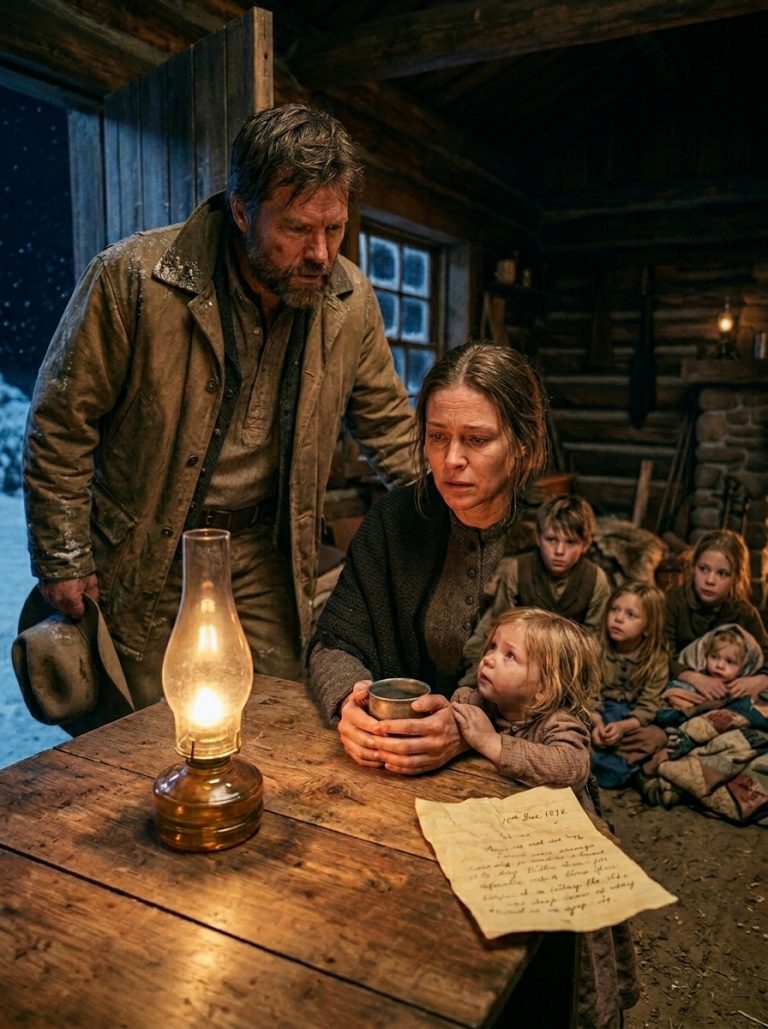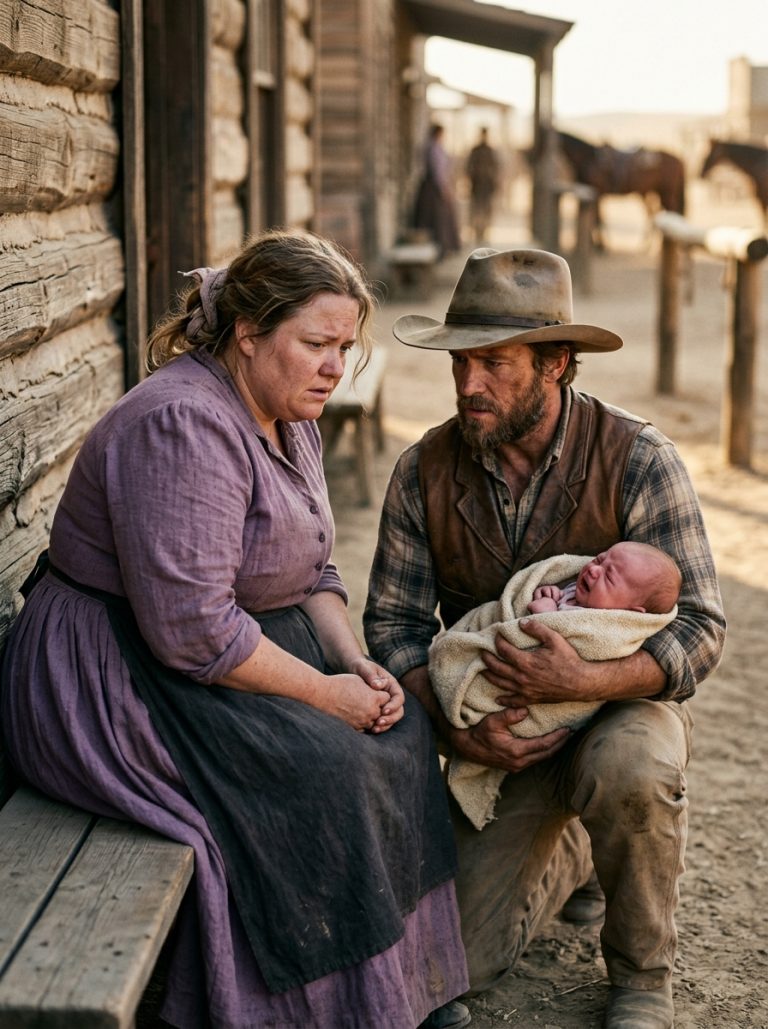
My Pregnant Daughter Looked At Me From The Mud And Said “They Locked Me Out Because Of The Baby’s Gender” — And That Was Only Half The Truth

The mud on my shoes was still wet when I understood that my daughter was not safe.
I had driven four hours from Macon to the Caldwell estate outside Nashville because she hadn’t returned my calls in eleven days. Not unusual for a busy woman in her third trimester, I told myself. Not unusual for a daughter married into a family that treated telephone calls to one’s own mother as a form of social leakage. I had made excuses for eleven days because the alternative required me to admit I had seen the signs earlier and chosen the comfort of not knowing.
The gate guard let me through with the particular stiffness of someone who had been given instructions about me specifically. The driveway was a quarter mile of manicured gravel, and by the time the main house appeared — all stone and glass and the kind of architecture that announces its owner’s net worth before you’ve stepped out of the car — the rain had started. Not a soft rain. The kind that arrives angry.
I found Sophie behind the east wing.
Not in the house. Not on the covered terrace. Behind it, in the gap between the ornamental garden wall and the old stone henhouse, crouched in the mud with her arms wrapped around her belly and her eyes tracking the house the way animals tracked the place the danger came from last.
She was eight months pregnant.
She was wearing her nightgown.
And when I said her name — just her name, just Sophie — she flinched so hard she nearly fell.
PART 1
My daughter had not always been afraid of her own name being called.
Sophie Reeves — Sophie Caldwell now, though I was going to have complicated feelings about that name for the rest of my life — had been the kind of child who walked into rooms expecting them to be glad she arrived. Not arrogance. Something better than that. A foundational confidence that the world was basically good and that people, given reasonable opportunity, would be decent to each other. She got it from her father, who had been that kind of man until he wasn’t there anymore to model it.
She was twenty-nine. An architect. Warm and funny and precise in the way of people who understood both beauty and structure, who believed that the spaces where people lived should tell them something true about their own worth. She designed community centers, public libraries, affordable housing with good light and real proportions. She cared about what buildings said to the people inside them.
She had met Brendan Caldwell at a gala for a children’s literacy foundation in Atlanta, and I had watched him across the room that night and thought: he’s performing. But Sophie had looked at the same man and seen someone who listened, who remembered, who drove down to Macon six weeks later and helped me carry a bookshelf up my apartment stairs without making it into a story about himself. He had been, for a long time, convincingly good at being the man Sophie wanted him to be.
The Caldwells were old Tennessee money converted into newer money through Caldwell Agricultural Holdings — a portfolio of food processing plants, distribution networks, and land holdings that stretched across four states. Brendan’s father, Graham Caldwell, had built most of it. His mother, Vivienne, had spent thirty years ensuring that the family’s social surface was unassailable. She was the kind of woman who made cruelty look like taste.
I had liked them cautiously. I had trusted them less. I had told myself that was class resentment masquerading as instinct.
I wish I had listened to the instinct.
Sophie’s hands shook when I pulled her up from the mud.
Her feet were bare. Her nightgown was soaked through, clinging to the hard round of her belly, and she was shivering in the particular way of people who had been cold long enough that their body had stopped fighting it.
“How long have you been out here?” I asked.
She looked at the house. “Since before dark.”
That was three hours.
I kept my voice very steady. “Can you walk?”
“Yes.” She let me take her arm. “Mom, don’t make a scene. If they see us—”
“Sophie.” I looked at her directly. “We’re leaving.”
Her face changed — that complicated, desperate expression of a person who has been inside something long enough that the outside seems dangerous too. “I can’t just leave. My things. The nursery. The papers Vivienne keeps saying I need to sign before—”
“We’re leaving,” I said again. “Right now.”
She started crying, and it was the kind of crying that had no sound because it had been practiced into silence — the kind you learned when you understood that being heard making noise had consequences.
That sound, or the absence of it, moved through me like a key.
I got her to the car.
We were almost to the gate when the headlights of a returning vehicle swept the driveway.
Brendan’s car.
He had not been home when I arrived. Now he was, and behind his headlights were Vivienne’s car as well, which meant both of them were about to walk through the front door and find Sophie gone.
I kept driving.
The gate guard started to close the barrier.
I put my hand on the horn and did not remove it.
He opened it.
We drove through.
Sophie sat in the passenger seat with her hands folded over her belly, watching the Caldwell estate disappear in the rearview mirror, and she said nothing for the first ten miles. Then, in a voice so small it barely reached me over the engine: “They told me a girl would complicate everything.”
I felt the cold start in my chest and work outward.
“What does that mean?” I asked.
She looked out at the rain-dark highway. “It means I need to tell you some things.”
I drove to the nearest hospital.
Not home. Not anywhere Brendan would look first.
The emergency room at St. Thomas Midtown smelled of antiseptic and institutional coffee, and the triage nurse looked at Sophie’s bare feet, her soaked nightgown, the trembling she couldn’t quite stop, and moved her through faster than I expected. A resident named Dr. Anaya Patel examined her, documented the bruising on her upper arm and her left hip — old enough to have yellowed at the edges, which meant they were not the first — and ordered fluids and monitoring. A social worker named Denise arrived forty minutes later with quiet eyes and a notepad and closed the door carefully before she sat down.
“Do you feel safe going back to your husband’s home?” she asked Sophie.
Sophie looked at her own hands for a long time.
“I feel safer in my mother’s car than I have in my own bedroom for four months,” she said.
Denise’s pen moved. Dr. Patel was summoned back. The room took on the careful, purposeful atmosphere of people becoming officially useful.
I sat beside Sophie’s bed and held her hand and waited.
When the social worker stepped out to start the paperwork, Sophie turned her head toward me.
“I’m sorry,” she said.
“Don’t,” I said immediately.
“I should have told you.”
I squeezed her hand. “You should have been safe without needing me to come find you.”
She looked at the ceiling, and I recognized the expression — the one people wore when they were preparing to explain something they had spent months explaining to themselves. “It didn’t happen all at once,” she said. “That’s what made it so hard to name. If it had happened all at once I would have known what it was.”
I know, I thought. That’s what they count on.
She talked for two hours.
The story came out the way real damage always came out — not as a single dramatic revelation but in pieces, each one survivable in isolation, each one shaped like an ordinary thing until you laid them beside each other and saw the pattern they made.
Brendan had been mostly good for the first two years. Not perfect. Occasionally dismissive. Sometimes cold in ways Sophie attributed to work pressure, to the weight of being Graham Caldwell’s heir apparent, to the particular emotional vocabulary of men raised in houses where feeling was managed rather than expressed. She had told herself that imperfection was ordinary. She had been right, up to a point.
The point was Graham Caldwell’s heart attack the previous winter.
Graham survived, but barely. The cardiologist said months of reduced activity. Vivienne, who had spent three decades positioning herself at the center of Caldwell Holdings’ social architecture, used the health crisis to insist that Brendan and Sophie move into the estate “temporarily” so the family could be close and unified during succession planning.
Sophie had not wanted to. Brendan said it made sense.
That was how the walls started moving.
First Vivienne reorganized the house schedule around her preferences without consulting Sophie. Then she began having opinions about Sophie’s wardrobe, her work schedule, her professional associations. Sophie’s architecture projects were described as “admirable” in the tone Vivienne reserved for things she found provincial. Brendan smoothed things over in the way that men smooth things in houses where one woman holds the authority and another is still deciding whether to contest it.
Then came the ultrasound.
The technician said, “Congratulations — it’s a girl,” and Sophie had felt joy so clean and complete it surprised her. She had known she would love the baby regardless. But hearing girl made everything real in a new way. She pictured a name she hadn’t chosen yet. A future.
Then she looked at Brendan.
His face had closed.
On the drive back to the estate, Vivienne — who had insisted on attending the appointment because the Caldwells valued involvement — spoke about nursery logistics in a voice stripped of its usual warmth. That night at dinner, Graham’s chair was empty because he was resting in the private wing, and Vivienne poured half a glass of wine and said, “Well. That creates a certain timeline pressure.”
Sophie had not understood what she meant.
She had learned, slowly and then all at once, over the following weeks.
The isolation came first. Her workspace was cleared out — Vivienne told the housekeeper Sophie needed quiet for the baby’s sake. Then Sophie’s car keys disappeared. The roads were too uncertain for a woman at this stage, Vivienne said. Her phone was gently confiscated for “rest” after Sophie spent an afternoon searching online about domestic abuse. Meals arrived late or not at all. When visitors came, Sophie was told she looked tired and should rest upstairs. Brendan became colder by degrees, which was its own particular horror because gradual coldness always left room for hope to explain itself.
“He brought me tea on a Tuesday,” Sophie said, staring at the hospital ceiling, “and then didn’t speak to me for four days. And I kept thinking: see, he still loves me. The Tuesday version is the real one. I just have to wait for the Tuesday version to come back.”
Her voice was very flat when she said it.
“What happened instead?” I asked.
“The other version stopped pretending to be temporary.”
Three weeks after the ultrasound, she overheard Vivienne in the study with Caldwell Holdings’ legal counsel. A door left open by a fraction. Phrases like trust clause, fiduciary control, proving maternal fitness, and we cannot let the filing be delayed past her delivery date. When she asked Brendan what it meant, he told her she was eavesdropping and that pregnancy was making her paranoid. Two days later, Vivienne presented papers for a “postpartum wellness plan” that included, when Sophie read the fine print, language about temporary guardianship and psychiatric evaluation in the event of postpartum instability.
Sophie told her she wouldn’t sign.
Brendan told her she was making everything harder.
Two nights before I arrived, he had hit her.
Not across the face. Men with things to protect were rarely that obvious. Hard enough to shock her. Hard enough to make the boundary move.
The day I drove through the gate, Vivienne had come to Sophie’s room with the guardianship papers again. Brendan came too. This time they did not dress it as concern for her health. Brendan said the family needed structure before the board filing that would determine interim control of the company. Vivienne said if Sophie loved her child, she would stop being small-town sentimental and sign.
Sophie refused.
Brendan grabbed her arm.
Vivienne told the housekeeper to leave.
There was yelling. There was a door. When it stopped, Vivienne said: “Let her think outside until she understands where she is.”
The mudroom door locked behind Sophie.
The rain was already starting.
I sat with that information in the fluorescent hospital light and felt something that was not quite anger and not quite grief but was the specific temperature of a woman realizing she had been given every piece of evidence in sequence and had chosen, every time, to understand it as something more survivable than it was.
“Why the henhouse?” I asked softly.
“There was an overhang,” Sophie said. “And when I went toward the gate, the security lights came on and I panicked. I thought if I just stayed quiet for a little while, maybe Brendan would open the door once he calmed down.” She paused. “I was dizzy. I didn’t want to fall.”
I closed my eyes.
Nobody put an eight-month-pregnant woman outside in the rain by accident.
Nobody watched her from a window and walked away by mistake.
You did those things when you had already decided that her comfort mattered less than her compliance.
My phone buzzed.
A text from Brendan: Where is my wife.
Not: Is she safe. Not: Is the baby okay.
Where is my wife.
I put the phone face-down on the plastic chair and made a list of every bruise Dr. Patel had documented, every date I could reconstruct, every message that had just arrived with its revealing order of priorities.
Poor women learned early that proof was not a luxury. It was the only currency that certain rooms accepted.
By dawn, I had three pages of notes and my fear had grown edges.
What I did not know yet — what Sophie had not yet told me, because she had not yet heard it herself — was that none of what had been done to her was really about wanting a son.
It was about something worth far more than that.
And the proof of it was already on its way to us, in the careful hands of a woman who had been invisible inside that house for long enough to see everything.
PART 2
Brendan sent flowers on the second day.
White roses. No card — which was either artlessness or calculation, and I had stopped giving him the benefit of the doubt on either count.
On the third day he sent a lawyer.
The letter arrived by courier to my apartment in Macon, which meant he had access to my address, which I noted with the specific chill that comes from understanding someone has been gathering information about you. The letter accused me of interfering in a protected marital unit, manipulating a vulnerable pregnant woman’s emotional state, and removing a patient from appropriate medical supervision without spousal consultation. It used the phrase class-motivated antagonism toward the Caldwell family twice, which I found so instructive I read those sentences aloud to Sophie while she ate soup in my kitchen.
She laughed for the first time since I’d found her in the mud.
It wasn’t funny. But it was revealing, and sometimes revelation was the closest thing to funny available.
That was how Margaret Ochoa came into our lives.
The hospital social worker Denise had given me a handwritten list of attorneys who handled domestic abuse cases involving wealthy families and the particular legal arsenals they deployed. Margaret’s office was above a pharmacy and a print shop in midtown Macon, and when Sophie and I sat across from her that same week, she read every page of my notes without a single interruption. She was in her early fifties with silver-streaked hair, a dark blazer, and the specific stillness of a woman who had long since stopped being surprised by what men with money were willing to do.
When she finished reading, she tapped Brendan’s lawyer’s letter with one finger and said, “This is useful.”
I stared at her. “In what way?”
“Arrogant people commit to their version of events before they understand what you have.” She set the letter aside. “What they’re building is a narrative of maternal instability. It’s a common strategy in high-asset families. They’ll argue Sophie was emotionally fragile, that she misunderstood concern for control, that the pregnancy exacerbated pre-existing anxiety issues. They need her story to sound messier than theirs.” She looked at Sophie. “So we make the truth cleaner.”
She filed for a protective order that afternoon and requested records — hospital documentation, prior legal correspondence from Caldwell Holdings’ counsel, any communication that connected Vivienne’s actions to Brendan’s.
Then she said the thing I had not expected to need said to me but apparently did.
“Families like the Caldwells operate on two resources,” she told us. “Their wealth and your shame. Money makes noise. Shame makes women quiet. We need you louder than both.”
Two days later, a woman named Ruth Gibbs called from a number I didn’t recognize.
She had been the Caldwells’ housekeeper for twenty-three years.
Her voice on the phone was low and careful. “Mrs. Reeves, I can’t stay on long. Are you alone?”
“No.”
“Good. Don’t say much yet. Can you meet me tomorrow morning at the Waffle House on Highway 70 in Bellevue? Back booth. Eight o’clock.”
She hung up before I could answer.
I barely slept.
At eight the next morning, Ruth slid into the booth across from Sophie and me wearing a rain jacket and the expression of a woman who had made a decision about something difficult and was now moving through the consequence of it with her eyes open. She did not order coffee. She set a zippered makeup bag on the table between the salt shaker and the sugar caddy.
“Inside that,” she said, “is a flash drive, some documents I copied before they changed the system passwords, and Sophie’s prenatal vitamins because nobody in that house should have had the right to hold those from her.”
Sophie’s eyes filled. “Ruth—”
“Later,” Ruth said, not unkindly. “Right now you need facts.”
Ruth’s nephew worked in estate security. After being ordered to delete footage from two exterior cameras on the night Sophie was locked out, he had saved copies first. One clip showed Brendan at the mudroom door — closing it, looking back through the glass at Sophie’s hand pressing against it from outside, then walking away. A second clip, timestamped nearly fifty minutes later, showed Vivienne at the window overlooking the east garden, looking directly at Sophie crouched in the rain near the henhouse overhang.
And walking away.
I felt my hands go cold around my coffee.
“There’s more,” Ruth said. “What they told Sophie about not wanting a girl — that was the cover story. Fear is easier to manage when it sounds petty. The real reason was money.”
Margaret leaned forward. “What money?”
Ruth folded her hands on the table. “Graham Caldwell had a daughter, years back. First marriage, before Vivienne. Name was Clara. Died in a car accident at twenty-four. Graham never talked about her publicly, but he rewrote a significant portion of the Caldwell trust after that. Kept it sealed. Vivienne found the terms after Graham’s heart attack when she started going through papers he used to keep locked. Brendan found out after the ultrasound.”
Sophie went very still. “What terms?”
Ruth looked at her steadily. “A major block of voting shares in Caldwell Holdings transfers into the Clara Trust upon the birth of the first female grandchild. Administered by an independent trustee and the child’s mother — unless the mother is adjudged legally unfit.”
The table was silent.
Sophie’s voice came out in pieces. “So when they kept saying a girl would complicate timing—”
Ruth gave her a long, heavy look. “Honey. That is what people say when the truth is worth too much to admit.”
Everything snapped into focus with the particular ugliness of a pattern completing itself.
Every insult dressed as concern. Every meal withheld. Every key removed. Every paper offered for signing. Every effort to make Sophie seem unstable, erratic, emotionally unreliable. They had not been trying to punish her for carrying a girl. They had been trying to break her before the girl arrived. A mother adjudged unfit lost her trustee position. A woman painted as mentally fragile before delivery could be painted as mentally fragile after it, over and over, in whatever rooms mattered.
They had not been managing a difficult pregnancy.
They had been running a campaign.
Margaret picked up the bag and let out a slow breath. “This changes what we can do.”
“Use it before they figure out I talked,” Ruth said. She stood, smoothed her jacket. “I’ve been in that house long enough to know when something has gone rotten all the way to the foundation.”
Sophie reached across the table. “Come with us.”
Ruth smiled sadly. “Baby, I’m sixty and too old to run. But I’m old enough to know what the right side of a thing looks like.” She squeezed Sophie’s hand once and walked out into the gray morning without looking back.
Three days later, Brendan came to my apartment.
He arrived alone, in a navy sweater and the kind of boots that cost more than my car payment, wearing remorse the way men wore it when they had run out of other options. Margaret had warned us this was likely. I told Sophie she did not have to face him. She insisted on the living room.
I stood in the kitchen with my phone recording from behind the fruit bowl.
He stepped inside and looked at Sophie in the armchair with an expression calibrated for maximum sincerity. “Sophie. Thank God you’re safe.”
She did not move.
He sat without being invited. He looked tired, which I noticed with more satisfaction than I was comfortable admitting. He said his mother had overreacted. Sophie had overreacted. It had gotten ugly. He was there to fix things.
“Fix what?” Sophie asked.
He blinked. “This whole situation. The spiral.”
“You locked me outside during a rainstorm.”
His eyes moved to me briefly, then back. “You were escalating. It was an hour. Stop catastrophizing.”
Sophie looked at him. “Why did you need me to sign those papers?”
His jaw tightened. He described board instability, investor pressure, his mother’s panic, the impossibility of the position he was in. He said he had been trying to protect them both.
“By having Vivienne declared temporary guardian of our daughter if I had an episode?” Sophie said.
His patience cracked just enough to show what was underneath. “You have no idea what kind of pressure I’ve been carrying since my father’s heart attack.”
“And you have no idea,” Sophie said quietly, “what it felt like to pound on a door you couldn’t open while your husband watched from the other side.”
He turned to me then, producing the careful patience of a man who believed composure was the same thing as innocence. “Mrs. Reeves, with respect, this is between spouses.”
I looked at him. “It stopped being between spouses when I found my daughter in the mud under a henhouse in her nightgown.”
Something ugly moved across his face. Then he looked back at Sophie, and the softness dropped entirely.
“Sign a temporary guardianship agreement,” he said. “Let us stabilize things through the delivery. I’ll make sure you’re set up — house, money, staff, whatever you want. After the birth, we manage the situation.”
“Manage what situation?” Sophie asked.
He looked at her with the particular impatience of a man who found clarity inconvenient. “After birth we manage the optics. This doesn’t have to be a disaster.”
Margaret stepped out of the hallway.
Brendan physically recoiled.
“Good afternoon,” she said pleasantly. “Thank you for that.”
He looked from her to me to Sophie, and in that sequence of glances he understood exactly what had just happened.
“You set me up.”
Sophie stood. Her hand rested under the curve of her belly, steady. “You told the truth because you thought the money made it harmless.”
He left without another word.
Margaret set her recorder on the table and looked at me.
“Well,” she said. “Now we have everything we need.”
But we did not have, yet, the one piece that would make this undeniable in a boardroom.
That was going to come from the one person no one in the Caldwell family had thought to be afraid of.
Graham Caldwell requested a meeting.
PART 3
Not through Vivienne. Not through Brendan. Through Margaret, by formal letter on Caldwell Holdings letterhead, and then by direct call from his personal assistant requesting a meeting to discuss trust administration, pending board matters, and allegations of misconduct by members of the Caldwell household.
“I don’t trust him,” I said.
Margaret looked at me. “Neither do I. That’s not the same as refusing to go.”
So three days later, Sophie and I rode with Margaret to Caldwell Holdings headquarters in Nashville — a steel and glass tower that smelled of floor polish and the specific confidence of institutions that believed their own permanence. Graham’s office was on the top floor. He was in a chair by the window when we entered, one hand slightly weakened from the heart attack’s aftermath, a plaid blanket over his knees, his face lined and severe in the way of men for whom authority had been ambient for so long they had stopped distinguishing it from personality.
His eyes went first to Sophie’s belly. Then to the bruising still fading on her arm.
“Sit,” he said.
No performance. No apology. The voice of a man who had spent a lifetime expecting rooms to organize themselves around him and was now, for reasons not entirely clear to me yet, using that same authority in a different direction.
He asked Sophie direct questions. Had Brendan struck her. Yes. Had Vivienne presented psychiatric forms. Yes. Had she been denied her phone, her car, food. Yes. Had Graham personally ordered any of it. No, Sophie said, and I almost resented her honesty because it complicated my anger, but it was the truth and she was not someone who bent the truth to suit her needs, which was one of approximately ten thousand ways she was better than the family she had married into.
Graham dismissed his assistant and looked at us for a long moment that felt less like authority than exhaustion.
“I am not asking for forgiveness,” he said. “If you are expecting a sentimental speech, you will be disappointed. But you deserve facts.”
He opened a folder and slid a document toward Margaret.
The trust amendment was real. Written years after the death of his daughter Clara — a name I had never heard until Ruth told us, a daughter Graham had apparently spent twenty years not discussing in public — restructuring a major voting block in Caldwell Holdings. Upon the birth of a female grandchild to one of his sons, the block would transfer to the Clara Trust, administered by an independent fiduciary and the child’s custodial mother, unless the mother was adjudged unfit. Graham had kept the amendment sealed because, as he said, looking at a point somewhere past us: “I did not want my sons treating reproduction as corporate acquisition strategy.”
Sophie stared at the document. “So they knew the whole time.”
“Vivienne knew after my heart attack,” Graham said. “Brendan knew after your ultrasound. I do not believe he understood why his mother had been so fixated on lineage until the technology confirmed what you were carrying.”
I could not contain myself any longer. “This happened in your house.”
His eyes moved to mine. “Yes.”
“Under your roof. Your wife locked my daughter outside in the rain.”
“Yes.”
“My daughter spent three hours in the mud under a henhouse because of a structure you built.”
Something crossed his face — not defense, not anger. Recognition. The expression of a man who had built a system and was now looking directly at what the system produced when it was operated by people with less conscience than he had credited them with.
“Yes,” he said.
The room was very quiet.
“My daughter Clara told me once,” he said after a moment, “that I had built a family where sons were treated like futures and daughters like problems to be managed. She told me that in this office, at that desk, three months before she died. I dismissed her. The trust amendment was not wisdom. It was guilt wearing legal clothing.”
Sophie’s voice shook but held. “And while you were converting guilt into documents, your wife and your son were trying to destroy me.”
“Yes. Which is why I intend to remove Brendan from succession consideration and Vivienne from any trust involvement. But I cannot do that on suspicion alone. I need evidence that survives a boardroom.”
Margaret tapped the recorder in her bag. “We have considerably more than suspicion.”
Something moved across Graham’s face. It was not warmth. It was the specific approval of a man who respected effectiveness above sentiment.
I did not like him. I would never like him. But I understood, sitting in that glass office with the Nashville skyline spread behind him like an argument for his own importance, that men like Graham Caldwell did not become useful because they became good. They became useful when their regret was genuine and their interests aligned with someone else’s survival. I was willing to use that. My daughter’s safety was worth using whatever was available.
The board meeting was set for the following Thursday.
Those days felt endless.
Brendan’s legal team shifted strategy once they understood what we had. The letters became sharper, more precisely aimed. One accused me of documented class antagonism toward the Caldwell family, a phrase I read three times with the same slow, cold fury each time. Abuse in wealthy families so rarely arrived the way people pictured it. No raised voices in public, no visible wreckage, no obvious monster. Instead: a PDF with careful language about maternal fitness. A missing car key. A door that locked from one side.
Margaret prepared Sophie for the boardroom the way someone prepared for an exam that was also a trial. Every likely attack rehearsed, every question anticipated. Why didn’t you leave sooner. Why didn’t you call the police. Why did you go toward the henhouse instead of the main gate. Were you taking any medication. Had you ever experienced anxiety following your father’s death. By the second run-through Sophie was exhausted and precise and steadier than she had been since before the estate.
“This is disgusting,” I said.
Margaret closed her folder. “Yes. It’s also how institutional power defends itself.”
The morning of the meeting Sophie wore a deep green maternity dress and braided her hair back from her face. She looked, if I am honest, like someone who had decided to stop asking permission to be taken seriously. I put on my good blazer — the one I had worn to my niece’s baptism — and drove through early Nashville traffic while the sun came up pale and clear over the city.
The Caldwell Holdings lobby was doing its best impression of an ordinary morning. Men in suits. Women with tablets. The professional hum of an institution performing its own normality. Vivienne was already there, standing near the elevator bank in cream silk and diamonds, looking like elegance itself.
She saw Sophie and went completely still.
Then she smiled.
“You look well,” she said. “I’m glad you’re feeling better.”
Sophie did not answer.
Vivienne’s smile held. “This is going to be very embarrassing for you, sweetheart.”
Margaret stepped between them. “We’ll see.”
The boardroom occupied the east side of the top floor, glass on two walls, walnut table in the center, the kind of space designed to make people feel that the decisions made inside it had the weight of geography. Brendan was mid-sentence when we walked in — presenting something on quarterly stability and transition planning, wearing a charcoal suit that looked exactly as expensive as it was. He stopped. Several directors turned. The general counsel said something to the board chair in a low voice.
Good.
Graham arrived through a side door a minute later. He did not look at Vivienne.
The board chair, a woman named Eleanor Foss with silver hair and the expression of someone who had spent a career cleaning up other people’s messes without being given credit for the cleaning, called the meeting to order. Brendan resumed. He was fluent and polished and, if you did not know what he had done, almost impressive. That was the perversity of people like him. They sounded most reasonable in rooms where the truth had not yet arrived.
When he finished, Margaret stood.
“Before succession matters are addressed,” she said, “this board needs to hear evidence regarding the conduct of Brendan Caldwell and Vivienne Caldwell that bears directly on fiduciary integrity, legal exposure, and basic fitness.”
Brendan’s jaw tightened. “This isn’t the forum for private family—”
Graham said, quietly: “Sit down.”
Brendan sat.
Margaret began with the hospital documentation. Then the photographs of Sophie’s bruises, dated and clinical. Then the security footage, played on the boardroom screen while the room went completely silent except for the sound of rain visible in the timestamp on the video. Brendan stepping back from the mudroom door. Sophie’s hands against the glass. Vivienne at the window fifty minutes later. Walking away.
Board members shifted. A woman near the far end of the table put her pen down.
Vivienne folded her hands. “This footage lacks context.”
“Of course,” Margaret said smoothly. “Let’s add some.”
She called in Ruth Gibbs.
When Ruth walked through that boardroom door in her navy dress and low heels, I felt something I had not been prepared for — a specific pride that had nothing to do with winning. Ruth looked at Vivienne once, looked away, and told the truth in a voice that never wavered. She described the locked door, the guardianship forms, Sophie’s phone removed for rest, meals withheld, the instructions to keep Sophie upstairs when visitors came, Brendan’s behavior after the ultrasound.
Brendan interrupted twice. Eleanor Foss stopped him both times.
Then Margaret played the living room recording.
Brendan’s voice filled the boardroom.
The minute that baby is born, everything shifts. We needed structure. After birth, we manage the optics.
The room did not move for several seconds.
Then Vivienne did what people like Vivienne did when the performance could no longer carry the weight of the lie. She dropped it.
“Julian, this is—” She caught herself. “Graham. Say something.”
Graham looked at her with the expression of a man examining a purchase he had been paying for longer than he had understood. “I am.”
Eleanor Foss turned to the general counsel. “Is the Clara Trust amendment authentic and currently active?”
The lawyer swallowed. “Yes.”
A murmur moved around the table.
Carter’s — Brendan’s face changed. Not from exposure. From the realization that the room he had spent his whole life performing for was now measuring him against a different standard.
“You cannot let a trust clause and a frightened woman determine corporate governance,” he said.
Sophie stood.
She was nine months pregnant, bone-tired, and the most composed person in that glass room.
“Say frightened again,” she said quietly.
Brendan stared at her.
“You told me a girl would complicate everything,” Sophie went on, her voice steady and clear. “The truth is you were afraid of what she represented the moment she arrived. Not because daughters were worthless. Because I — her mother — would have a seat in the room you’ve been trying to control. So you isolated me, you withheld food and my phone and my keys, you hit me, and then you locked me outside in a rainstorm at eight months pregnant. Not because I was weak. Because you were terrified of what I would have the right to become.”
Vivienne rose. “You have no idea what I have sacrificed for this family.”
Graham’s voice cut across hers without raising at all. “That is precisely the problem.”
She turned on him with twenty years of managed composure burning off at last. “I kept this family standing. I kept your name clean. I kept your sons positioned. And you threw it all to a dead girl who couldn’t even stay alive to appreciate what you built.”
The room went very quiet.
Graham looked at his wife for a long moment.
“I didn’t rewrite it for Clara,” he said. “I rewrote it for the ones you were willing to erase in her absence.”
I do not think anyone in that room will forget the silence that followed.
Eleanor Foss was the first to speak.
“Effective immediately, Brendan Caldwell is suspended from all succession proceedings pending a full investigation. Vivienne Caldwell is removed from any role relating to the Clara Trust. Outside counsel will review civil and criminal exposure. Ms. Caldwell” — she used Sophie’s married name one last time, with something that sounded almost like acknowledgment — “you and your attorney will be contacted regarding the trust’s protective arrangements.”
Brendan half rose. “You can’t—”
“Watch us,” Eleanor said.
Security had been stationed outside.
Brendan stopped beside Sophie on his way out. His voice dropped to something that was supposed to sound like a warning but came out sounding like the last argument of someone who had run out of leverage.
“You think this makes you powerful?”
Sophie looked at him.
“No,” she said. “I think it makes me done.”
He left.
I wish I could tell you it felt triumphant.
It felt like breathing after holding your breath for a very long time. Not euphoria. Something quieter and more durable than that.
Three weeks later, on a warm Thursday afternoon when the sky had finally decided to be simply blue without any threat in it, Sophie went into labor.
There was pain. There was fear. But it was the ordinary fear of a hard thing happening, not the particular hunted fear that had lived in her body since the first time Brendan raised his voice at something she couldn’t fix. She gripped my hand hard enough to leave marks during two contractions and laughed through one because I told her if she broke my fingers after everything we had survived, she was paying my medical bills.
Dr. Patel delivered the baby at 9:14 in the evening.
A girl. Eight pounds and three ounces. Dark hair. Enormous lungs. The specific outrage of a person who has just arrived in the world and has opinions about it immediately.
When they laid her on Sophie’s chest, every hard thing that room had held dissolved.
Sophie cried openly, fully, with no apology anywhere in it.
I stood at the bedside and looked at my granddaughter — this small person who had been treated as a threat, as a complication, as a corporate liability before she had drawn a single breath — and felt something move through me that had no clean name.
“What’s her name?” Dr. Patel asked.
Sophie looked up at me. Then down at the baby.
“Clara Josephine Reeves,” she said.
I blinked. “Reeves?”
“I’m keeping my own name where it matters,” she said. “My daughter starts with mine.”
Later, when Margaret informed Graham of the name through the appropriate legal channels, he sent no flowers, no letter, no attempt to purchase gratitude. He sent a single line through his attorney: Understood. That restraint was the first genuinely decent thing he had done for my daughter, and she and I both recognized it as such.
The divorce took months.
Men like Brendan did not surrender cleanly. There were depositions, financial disclosures, board restructurings, and enough legal paper to insulate a house. Brendan lost his succession position permanently. Vivienne left the Caldwell estate before the first frost. What legal consequences found them were partly public and partly private, but neither of them ever reclaimed the position they had assumed was theirs by inherited right.
Graham stepped back from day-to-day operations the following spring.
He did not ask to be in Clara’s life. He asked Margaret whether a portion of the Clara Trust distributions could be directed — with no conditions, no naming rights, no operational involvement — toward programs supporting women and children leaving abusive situations. Margaret ensured the language gave him no leverage and no visibility. Sophie accepted that portion of the resources, not for him, but because taking money out of a broken system and putting it into a better one was one of the few forms of justice that actually grew.
A year after the storm, Sophie bought a piece of land outside Nashville — a modest house, a half-acre of garden, and an old stone outbuilding near the fence line with a leaning roof and good bones.
The first time I saw it, my throat tightened.
She put her hand on my arm before I could say anything. “Not like that one, Mom.”
I looked again.
She had stripped the old building and rebuilt it — new roof, proper windows, a fresh coat of white paint with flower boxes beneath the sills. Inside: not storage, not equipment. Shelves of supplies, a coffee station, a donated laptop, a play corner with soft mats and board books, and a table covered in organized folders: emergency housing, prenatal support, legal clinic dates, protective orders. On one wall, Sophie had painted a mural — women walking through open doorways, birds lifting into a wide blue sky above them.
She called it Open Door.
Women came twice a week from shelters, from hospitals, from churches, from the specific underground network of people who knew someone who needed to know someone. Some needed paperwork. Some needed an hour in a room where nobody was monitoring them. Some brought children. Some brought fear so new you could see it in the way they held their shoulders, braced for the next thing.
Ruth ran the coordination with the calm efficiency of a woman who had been managing difficult households for thirty years and had finally found one worth managing. Margaret ran a legal clinic once a month. I drove down from Macon when I could and handled whatever needed handling — coffee, baby-holding, the particular usefulness of a middle-aged woman who had stopped worrying about whether she was doing it gracefully.
And little Clara, round and serious and absolutely certain of her own importance, learned to pull herself upright on the table legs in that converted outbuilding, practicing standing among the folders and the coffee cups and the women who arrived frightened and left a little less so.
A year before, my daughter had been crouched in the mud in the rain behind a stone henhouse, hiding from a family that had mistaken wealth for the right to determine what she was worth.
Now she stood in a room she had built with her own hands, explaining to a young woman how to fill out a petition for a protective order while Clara held onto her leg and watched the proceedings with the focused interest of a child who had inherited her mother’s conviction that the world could be organized into something better than it currently was.
Some people believed justice was a verdict. A name in a headline. A family humiliated publicly.
Sometimes it was.
But sometimes justice was smaller and stranger and far more difficult to build. Sometimes it was a woman who stopped apologizing for surviving. Sometimes it was a mother who learned that the mistake she had made — a man from a family like that can open doors, I had said once, in my own kitchen, like a woman who did not know yet what kind of doors she meant — could be turned into vigilance instead of a grave.
Sometimes justice was taking the worst symbol in your story and making it into a place where other people heard the sound of their own lives coming back.
On warm afternoons I sat outside Open Door with iced tea while Clara investigated the flower beds and Sophie’s laugh came through the window — fully, without edges, the way she had laughed before she learned what fear could build inside a beautiful house.
Every now and then rain moved across the fields in the distance, silver and soft, and I remembered the mud on my shoes and my daughter’s face tracking the house from the shadows, and the particular silence of a woman who had learned to stop being heard.
Then I looked through the open door of that bright, rebuilt building and saw women talking, children playing, paperwork being completed, paint drying on canvases, and my daughter standing at the center of it all with Clara on her hip and her name on the deed and no one in the world who could tell her what she was worth.
And I understood, in the way you understood things that had taken a long time and too much to learn, that the story had not begun the night I found Sophie in the mud behind that henhouse.
That was only the night the ending changed.
The real story began the morning Sophie stood up in a boardroom full of people who had counted on her silence and said, clearly, for anyone willing to hear it:
I know exactly what you were afraid of losing.
And you were right to be afraid.